
Practical Steps to Secure Your ICT Infrastructure When Expanding into Kenya
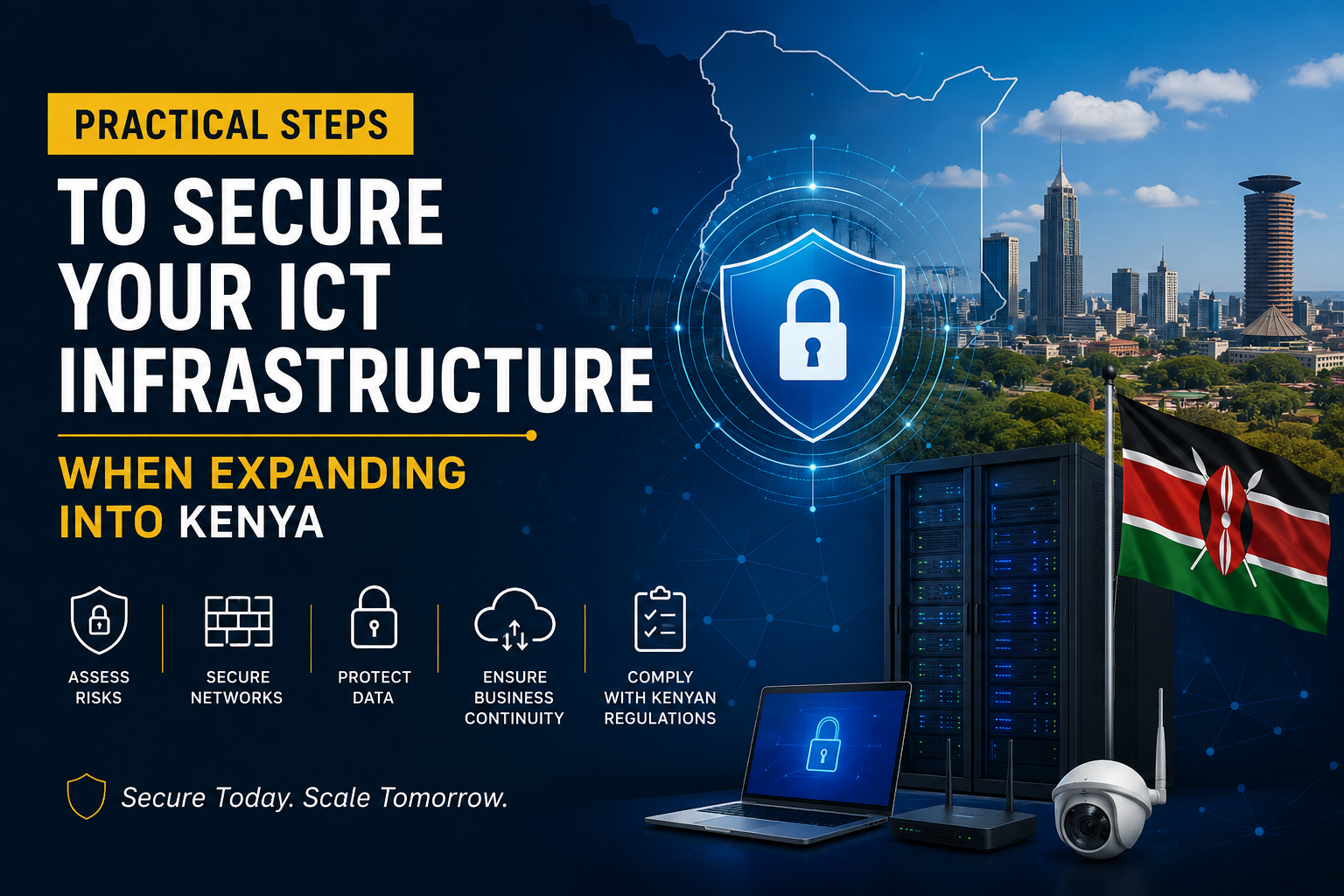
Entering the Kenyan market offers huge growth potential, but it also brings unique ICT challenges. A robust, secure infrastructure is the backbone of any successful operation, yet many companies underestimate the local nuances that can expose them to downtime, data loss or compliance issues. This article walks you through the practical steps you need to take to secure your ICT environment before, during, and after your market entry.
1. Conduct a Localised ICT Risk Assessment
Before any technology is deployed, map out the specific risks that apply to Kenya:
- Power reliability – Frequent outages mean you need uninterruptible power supplies (UPS) and possibly backup generators.
- Internet connectivity – Evaluate the availability of fiber versus 4G/5G in your target city and consider dual‑provider redundancy.
- Regulatory landscape – Kenya’s Data Protection Act requires local storage for certain personal data. Identify which data sets must reside on Kenyan servers.
- Physical security – Office locations may have varying levels of access control; plan for CCTV and secure server rooms.
Create a simple checklist and assign owners for each item. A focused risk assessment prevents costly surprises later on.
2. Choose the Right Infrastructure Model
Your choice of infrastructure will determine both cost and resilience:
- On‑premise data centre – Ideal for highly regulated data that must stay within Kenya. Partner with a reputable local colocation provider that offers 24/7 monitoring and fire suppression.
- Hybrid cloud – Combine a local edge server for sensitive workloads with a global cloud (AWS, Azure) for scalability. This balances compliance with performance.
- Full cloud – Viable if your data does not fall under strict local storage rules. Ensure the cloud provider has a presence in East Africa to reduce latency.
Radiotech ICT Experts can guide you through the selection process and set up a hybrid environment that meets both security and performance goals.
3. Implement Core Cybersecurity Controls
Kenya’s cyber threat landscape is evolving, with ransomware and phishing attacks on the rise. Adopt these baseline controls:
- Multi‑factor authentication (MFA) for all remote access and privileged accounts.
- Endpoint protection that includes behavioural analytics to detect unknown malware.
- Network segmentation to isolate critical systems (finance, HR) from general office traffic.
- Regular patch management – automate updates for operating systems, firmware and applications.
- Data encryption – both at rest and in transit, especially for any cross‑border data flows.
Document each control in a security policy and train staff on their responsibilities.
4. Build a Local Support and Maintenance Framework
Even the best‑designed system needs ongoing care:
- Service Level Agreements (SLAs) with local vendors for hardware repairs, internet uptime and power backup.
- Remote monitoring – set up a central dashboard that alerts your team to outages or security events in real time.
- Knowledge transfer – conduct technical training for your Kenyan staff on routine troubleshooting and security best practices.
Having a reliable local support network reduces downtime and builds confidence among your Kenyan partners.
5. Leverage Kenya Market Entry Support
Navigating legal, tax and operational requirements can be overwhelming. Radiotech’s Kenya market entry support service provides a single point of contact for:
- Registering your business and obtaining necessary licences.
- Aligning your ICT setup with local compliance mandates.
- Connecting you with vetted local vendors for power, connectivity and security.
By bundling ICT planning with market entry assistance, you avoid fragmented advice and accelerate your rollout.
Closing: Your Next Concrete Step
Start with a focused ICT risk assessment tailored to your intended Kenyan location. Use the checklist above, assign responsibilities, and schedule a 2‑hour discovery call with Radiotech ICT Experts. We will help you validate your findings, recommend the optimal infrastructure model, and outline a security roadmap that aligns with Kenya’s regulatory environment.
Taking this first step now saves time, money, and reputational risk as you expand into one of Africa’s most dynamic economies.